Navigation Lights: How to Read Boats at Night
After dark, every vessel becomes three colors and a bearing. Navigation lights are the sea's night language — and it can be read fluently with surprisingly little study.
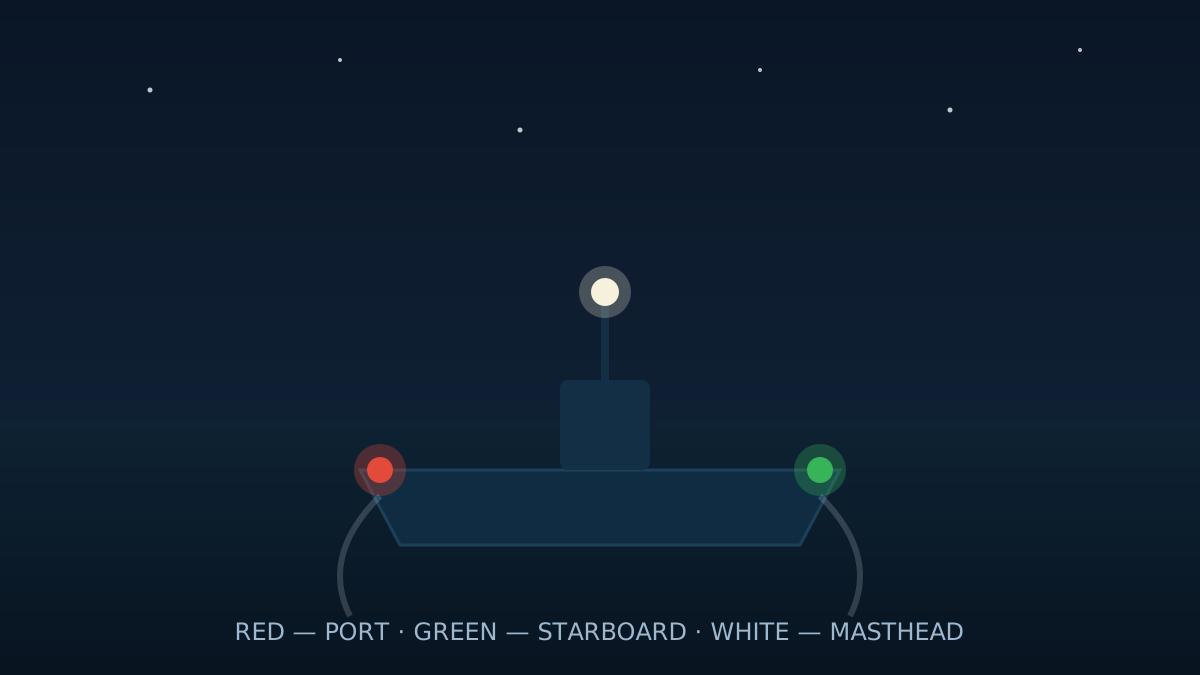
The basic grammar
Power-driven vessels show a red light to port, green to starboard, each visible across its own bow sector, plus a white sternlight aft and, on motor vessels, a white masthead light facing forward. The colors alone tell you orientation: see green, you are looking at her starboard side; see red and green together, she is coming straight at you — the sight that earns immediate attention.
Direction from color
The system converts geometry into color. Crossing situations resolve at a glance: if the other vessel shows you her red side, you are the give-way vessel in most crossings — a memory aid old as the rules: "If to starboard red appear, 'tis your duty to keep clear." A lone white light is usually a sternlight — you are overtaking — or an anchored vessel.
Reading vessel types
Extra lights spell vocabulary. Two masthead lights mark a vessel over 50 meters; green over white, fishing tonight; red over white, a vessel restricted in her ability to maneuver... each combination defined in the Colregs. Small-boat sailors need only a handful by heart: big ship, fishing vessel, tug and tow, anchored vessel — the neighbors most often met.
Being seen matters more
The other half of the language is speaking it: correct lights, actually switched on, bright and unobstructed. Many small-craft collisions trace to missing or misrigged lights, or to deck floodlights drowning them out. Check your lights before dusk, carry spares, and remember that at night you are your lights — nothing else of you exists to other helms.
Conclusion
Three colors, a few combinations, one habit of looking: night navigation's alphabet is short, and knowing it turns darkness from menace into a well-lit conversation between vessels.
Sources & Further Reading
- International Maritime Organization (IMO): imo.org
- US Coast Guard Boating Safety: uscgboating.org
- National Maritime Museum collections and references